Crafted for performance and dependability, the external circulating water bath provides dependable temperature control with an intuitive interface. It has a rugged outer casing and stainless steel inner tank to withstand corrosion and contamination. The external circulating water bath offers rapid heat-up and uniform temperatures across the chamber, minimizing the possibility of sample destruction. Its display screens allow for real-time monitoring, facilitating precise adjustment during the experiment. Low noise operation with advanced thermal sensors, the external circulating water bath guarantees stability and reliability during prolonged laboratory use.
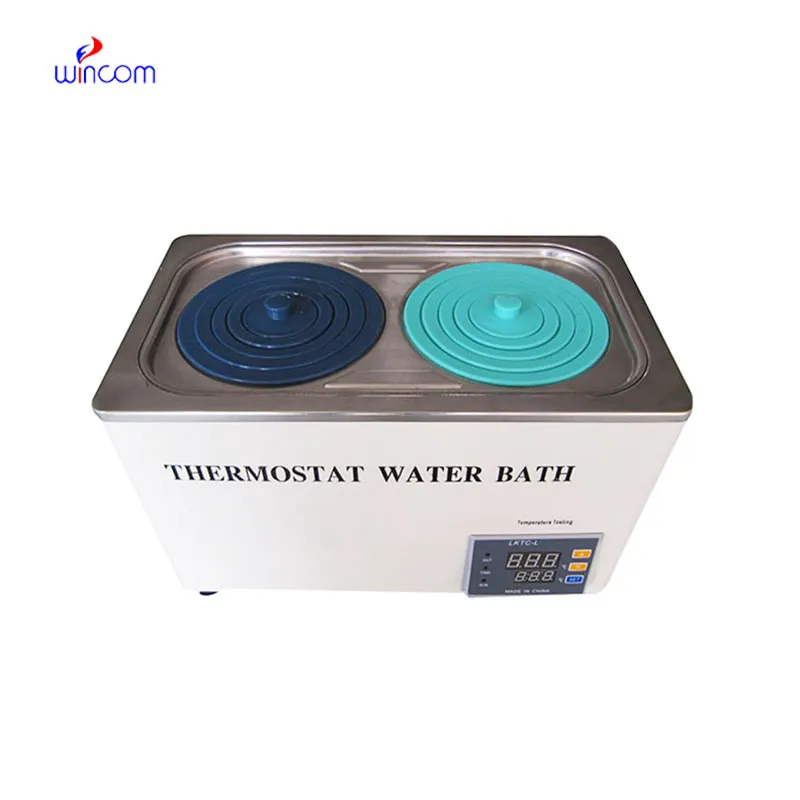
The external circulating water bath provides a uniform platform to warm chemical and biological samples. At the academic level, it is used to instruct experimental approaches based on temperature control. In medical and chemical research labs, the external circulating water bath provides uniform heat for reactions with uniform incubation. The external circulating water bath can be utilized to dissolve molecules, evaluate the stability of products, and conduct thermal studies. With steady heat uniformity, the external circulating water bath enhances quantitative and qualitative analysis precision and serves different laboratory applications for widespread research fields.

In the near future, the external circulating water bath will consist of intelligent systems capable of automating laboratory processes. Predictive maintenance features will alert users before failure, conserving time. Cloud connectivity will ensure seamless data sharing between research labs, promoting collaboration and quality control. The external circulating water bath will also consist of adaptive temperature algorithms that respond dynamically to sample conditions. With continued focus on sustainability and automation, it will redefine laboratory heating equipment for a digital precision age.

The external circulating water bath will perform optimally and endure with good maintenance. Check the water level constantly to avoid overheating and destruction of internal parts. Regular draining and chamber cleaning will avoid deposits or contamination. Use of distilled water avoids residue build-up. The exterior and control panel can be wiped using a soft, damp cloth. Regular inspection of heating elements and temperature sensors ensures efficient operation with accuracy. Store the external circulating water bath in a dry environment and it enhances its longevity.
A external circulating water bath delivers even heating for laboratory purposes where accuracy is essential. It holds water at fixed temperatures for such procedures as bacterial culture incubation, heating of reagents, and thawing of samples. The internal temperature sensors and thermostat of the **external circulating water bath** facilitate even conditions during use. Its stainless-steel chamber is corrosion-resistant, with security features protecting samples from overheating. The **external circulating water bath** facilitates reliability and consistency that enable precise scientific and experimental methods.
Q: What types of laboratory work benefit from using a water bath? A: Water baths are used in microbiology, chemistry, and biotechnology for incubating samples, warming reagents, and melting substances safely. Q: How can contamination be prevented inside a water bath? A: Cleaning the tank regularly, using distilled water, and covering the bath when not in use can significantly reduce contamination risk. Q: Is it safe to leave a water bath running overnight? A: It is generally safe for models with over-temperature protection, but regular supervision and adherence to manufacturer guidelines are strongly advised. Q: What causes uneven heating in a water bath? A: Uneven heating may result from improper circulation, incorrect water level, or malfunctioning heating elements. Q: Why is it important to monitor the water level in a bath? A: Maintaining an adequate water level prevents damage to heating elements and ensures consistent thermal contact with the samples.
We’ve been using this mri machine for several months, and the image clarity is excellent. It’s reliable and easy for our team to operate.
The water bath performs consistently and maintains a stable temperature even during long experiments. It’s reliable and easy to operate.
To protect the privacy of our buyers, only public service email domains like Gmail, Yahoo, and MSN will be displayed. Additionally, only a limited portion of the inquiry content will be shown.
Could you share the specifications and price for your hospital bed models? We’re looking for adjus...
Hello, I’m interested in your centrifuge models for laboratory use. Could you please send me more ...
E-mail: [email protected]
Tel: +86-731-84176622
+86-731-84136655
Address: Rm.1507,Xinsancheng Plaza. No.58, Renmin Road(E),Changsha,Hunan,China


 EN
EN
 af
af
 es
es
 ar
ar
 tr
tr
 sw
sw
 pt
pt
 th
th
 ur
ur
 bn
bn
 ne
ne
 vi
vi
 km
km
 lo
lo
 de
de
 ru
ru
 fi
fi
 nl
nl
 fa
fa
 fr
fr
 ko
ko